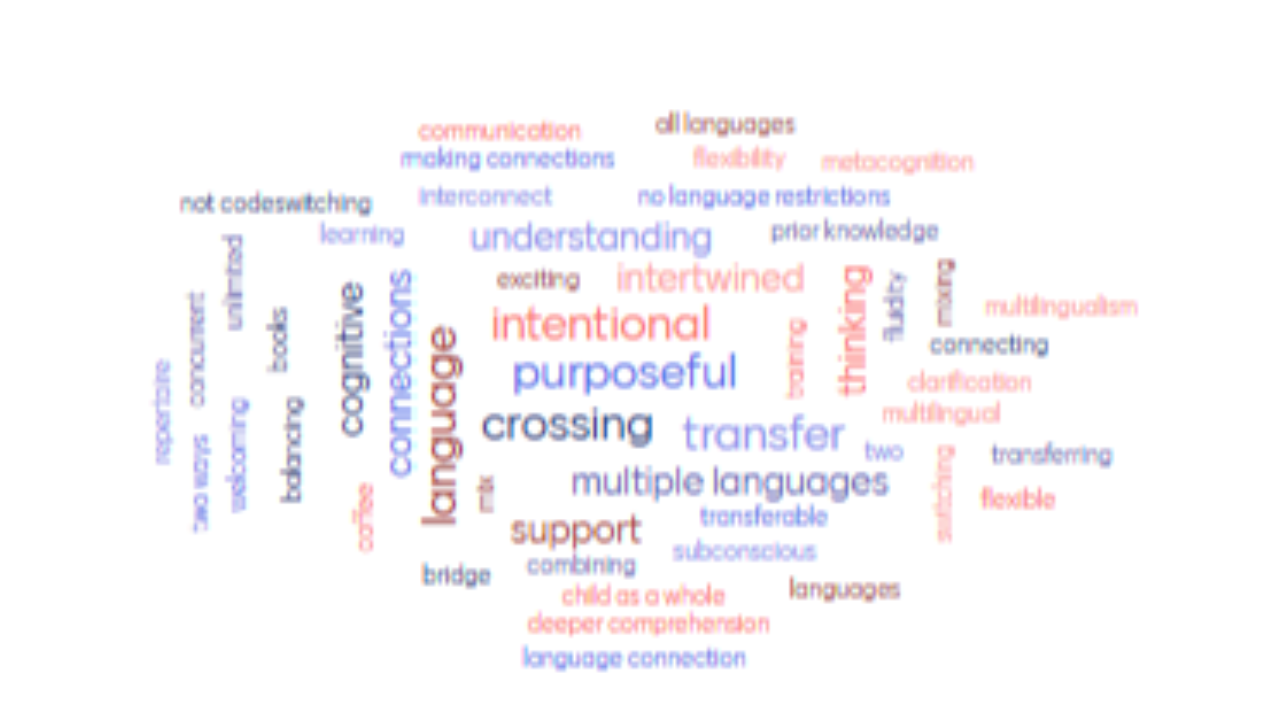
What Is Pedagogical Translanguaging?
Jul 03, 2026Pedagogical translanguaging originated in the 1980s through the Welsh revitalization work of educator Cen Williams, who sought to address unequal power dynamics between English and Welsh by incorporating teaching methods that would elevate the status of Welsh and enable students to use their dominant language (English) to develop their proficiency in Welsh. The approach involved concurrent use of the two languages, providing input through one language and requiring output through the other (Cenoz & Gorter, 2020; Lewis et al., 2012, 2013).
More recent pedagogical translanguaging initiatives based in the United States focus on the concurrent use of the home language and the instructional language to support learning, affirm home-language use, and foster positive identity formation among multilinguals in a variety of educational contexts (Celic & Seltzer, 2012; García et al., 2017; García & Wei, 2014; Palmer et al., 2014; Sánchez et al., 2018; Solorza et al., 2019; Tian, 2022). Within the context of dual language education (DLE), the concurrent use of both program languages for instruction comes into tension with the established practice of separation of languages (Ballinger et al., 2017; Cummins, 2005, 2007; de Jong, 2016; Fortune & Tedick, 2019; Guerrero, 2021; Lyster, 2019; Palmer et al., 2014; Sánchez et al., 2018; Solorza et al., 2019).
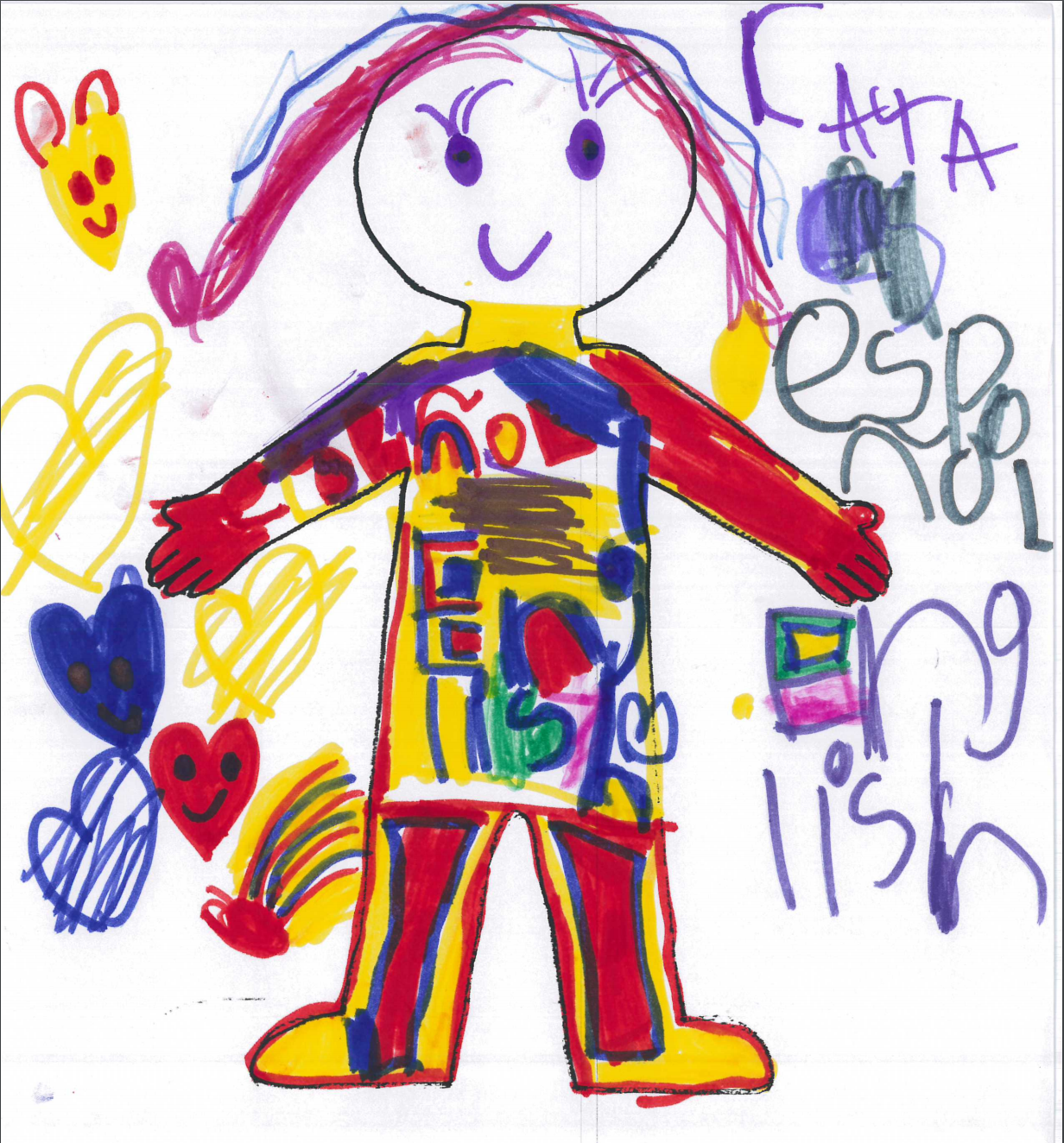
Photo description: Identity text created by one of our students
To begin to navigate this tension, it is helpful to recognize that the recommendations for both approaches overlap in important ways. Specifically, pedagogical translanguaging guidance for DLE educators (García et al., 2017; Sánchez et al., 2018; Seltzer & García, n.d; Solorza et al., 2019) makes several key points:
- It’s still necessary to retain separate instructional blocks in English and the partner language while making space for translanguaging practices.
- Pedagogical translanguaging is planned, intentional, and explicit. In this way, it contrasts with spontaneous translanguaging (Cenoz & Gorter, 2020), which is the natural, fluid language use of multilinguals that may incorporate elements of multiple languages—what is sometimes referred to as hybrid language use (Gutiérrez et al., 1999).
- Pedagogical translanguaging does not consist of simply repeating yourself in the other program language if the students don’t understand you when you say something in the language of instruction.
Likewise, the GP3 (Howard et al., 2018) maintains the importance of separation of languages, but also asserts the need to thoughtfully and intentionally incorporate opportunities for the concurrent use of both program languages to foster the attainment of program goals. The exemplary practice descriptor for Strand 3, Principle 1, Key Point B, “Instruction incorporates appropriate separation of languages to promote high levels of language acquisition,” states,
“There is a consistent separation of languages for instruction, with high expectations for teachers and students to use the language of instruction and with scaffolds provided to encourage language production. However, in the classroom and throughout the school, opportunities exist for students and teachers to use both languages concurrently for clear academic, linguistic, or school purposes, either through brief teachable moments or through extended activities. Teachers and students regularly engage in self-reflection to identify when and why they are maintaining separation of languages vs. using both languages, and adjust language choices as needed to ensure that program goals and learning objectives are being met” (Howard et al., 2018, p. 58).
In other words, as Hamman-Ortiz and Prasad (2022) similarly point out, the converging guidance from both perspectives conveys a both/and rather than either/or approach. There is a need for both sustained engagement with each program language within monolingual spaces and opportunities for concurrent use of both languages in bilingual spaces rather than either one practice or the other. Thus, consistent with the framing proposed by others (de Jong, 2016; Lewis et al., 2013; Lin, 2006), the question is not whether to incorporate pedagogical translanguaging in the context of DLE; but rather, when, why, where, how, how much, and by whom?
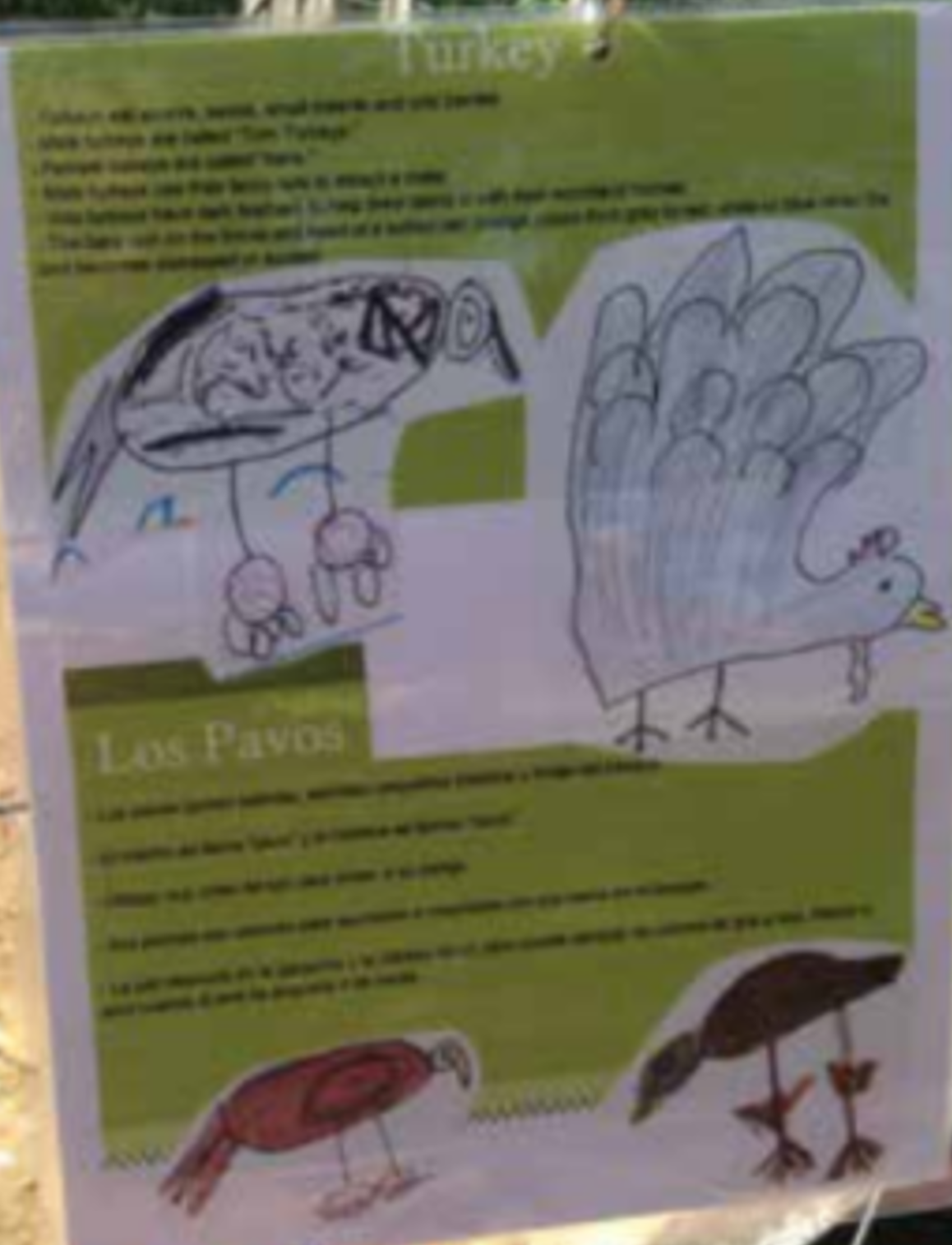
Photo description: Bilingual animal description created by our students as part of a year-long community-based project at a local sustainable farm
Reprinted with permission from Howard & Simpson (2024) Dual language tandem teaching: Coordinating instruction across languages through cross-linguistic pedagogies.
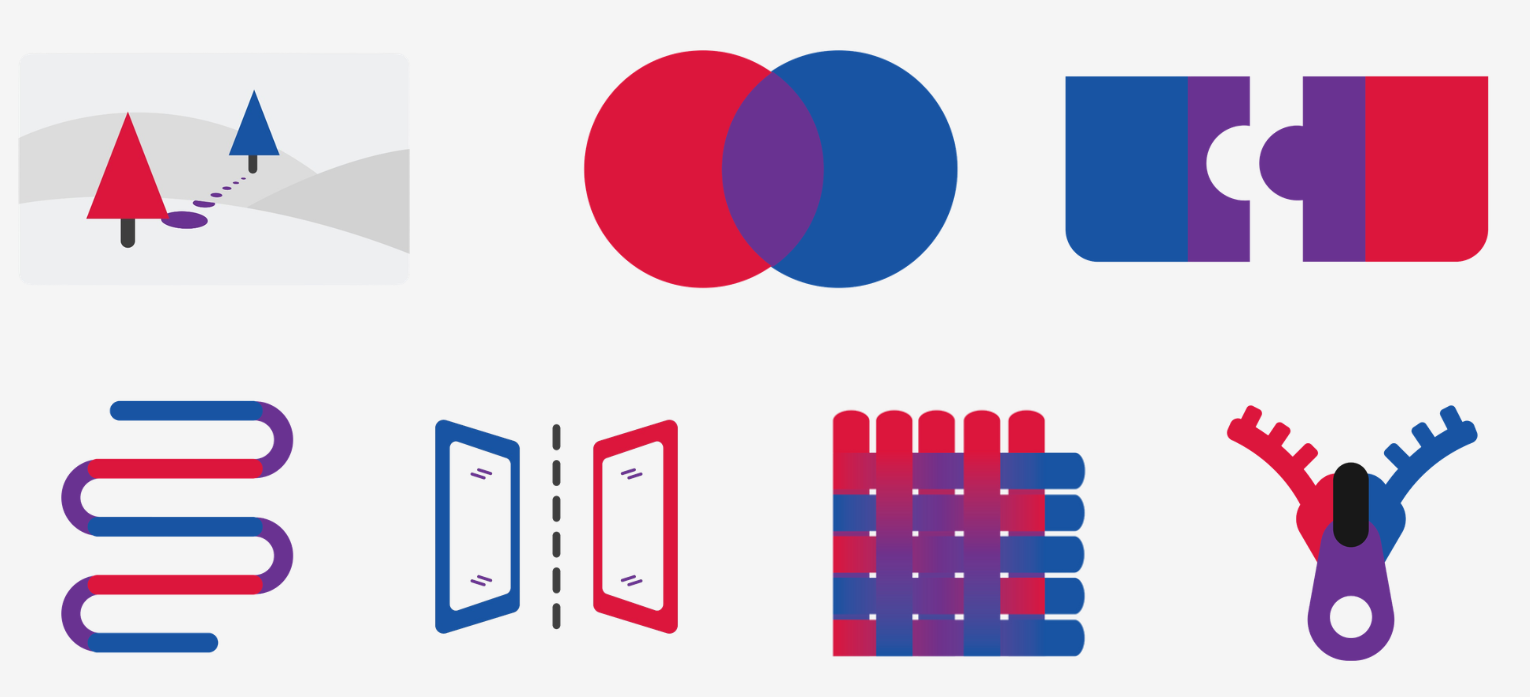
Interested in learning more about pedagogical translanguaging in dual language programs? See our free monograph Navigating Tensions Between Translanguaging and Separation of Languages in Dual Language Programs and our book Dual Language Tandem Teaching: Coordinating Instruction across Languages through Cross-Linguistic Pedagogies! We introduce seven cross-linguistic pedagogies designed to answer these questions.
PS...If you’d like to be notified when new blog entries are posted, subscribe to our mailing list below. Likewise, if you’d like to be part of a larger conversation about this topic, join our Facebook group Dual Language Tandem Teachers! We’ll have conversation prompts to stimulate discussion, and that’s also where we’ll announce new blog posts, upcoming presentations, and other related activities. We also invite you to like and follow us on Facebook and Instagram. ¡Adelante!
Let's stay connected!
We hate SPAM. We will never sell your information, for any reason.
